I was interviewed on paranormal/sci-fi author Veronica Scott’s blog today, come check it out! http://veronicascott.wordpress.com/
I’m guest-blogging at Jennifer Lynne’s blog today about self-image, mean boys, dance, and confidence. Please join me, and feel free to share a story about your own personally inspirational moment.
http://jenniferlynne.com.au/guest-author-laura-sheehan

Join me on Roz Lee’s blog today as I discuss how the best action movies are basically just romantic suspense novels on film.
 Check out the blog to see my Top 10 Best Action Movies that are really Romantic Suspense Novels on Film. Agree? Disagree? Comment today (May 8, 2012) for a chance to win a $10 Amazon gift card! (Which you will hopefully use to buy my novel, DANCING WITH DANGER, wink wink nudge nudge)

For those of you not in the know, “hater” is a term that entered American slang vocabulary in the early 2000’s. According to the top-rated definition on Urban Dictionary, a “hater” is:

You can find "haters gonna hate" memes all over the internet, usually accompanied by a photo of someone strutting cockily.
So how does it relate to romance novels, you ask?
Well, I think it ought to be the new motto of romance authors.
It’s no secret that for many uninformed people, the term “romance novel,” is equivalent to “trashy.” These haters assume inaccurately that romance novels are of lesser quality than other types of fiction, that the writing is poor, the characters shallow, the plot formulaic.
And yet books within the romance genre consistently nab the largest share of the consumer market year after year. So why do they continue to carry the undeserved burden of being considered “lesser fiction?”
In my opinion, as both a voracious reader and author of many types of fiction, this misconception is due largely to the misunderstanding of what a romance novel actually is.
The most widely accepted definition of the genre is the one provided by the Romance Writers of America: Novels that have a central love story and an emotionally-satisfying and optimistic ending.
It’s a simple definition that embraces a wide variety of fictional works. Acclaimed literary novels such as Pride and Prejudice and Jane Eyre and more recent novels like Outlander are all, by this definition, romance novels.
But haters don’t think of Fabio and bodice-ripping covers when they think of Jane Austen, do they? So why would they assume all romances are formulaic, shallow pieces of literary junk? I’ll tell you why:
Haters gonna hate.

This is a romance. (A series Harlequin American Romance, "His Valentine Triplets," by Tina Leonard)
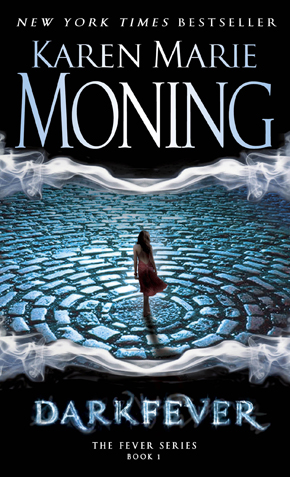
But so is this. (A single-title paranormal romantic suspense, "Darkfever" by Karen Marie Moning)
Remember, the only requirements for a novel to be considered a romance is that it have a central love story and a happy ending. Every genre has restrictions that allow it to be categorized. Just as a mystery is “a novel in which the reader is challenged to solve a puzzle before the detective explains it at the end,” and science fiction deals with “future settings, futuristic science and technology, space travel, aliens, and paranormal abilities.” It doesn’t make each story within that genre formulaic.
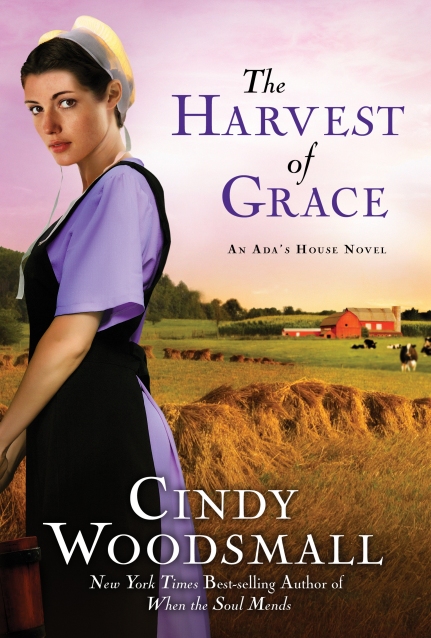
This is also a romance. (An Amish, inspirational romance, "The Harvest of Grace," by Cindy Woodsmall)

And this, too. (A contemporary romantic comedy, "London Falling," by Emma Carr)

And even this. (Futuristic romantic suspense, "Vengeance in Death" by J.D. Robb, aka Nora Roberts)
Lumping all romance novels into one, easily-criticizable category is useless and unfair. And judging an entire genre based on your opinion of one book is equally ridiculous. Sort of like calling 2001: A Space Odyssey, Aliens, Star Trek and E.T.: The Extraterrestrial “trashy” because you hated Battlefield Earth.
Sure, romance isn’t for everyone.
There are plenty of genres I have no interest in. For example, I am not a fan of horror. But just because I think Saw III is torture-porn, doesn’t mean I think The Exorcist is too.
There is a portion of the population who (sadly) think that romance is cheesy and that happy endings are unrealistic. These people have my sympathy, and to them I say: Don’t read romance novels.
And to the rest of us, my fellow romance authors and the majority of the general book-buying population, I say:

They say not to do it, but admit it, you’ve done it before and will do it again.
The results of the 2011 Romance Book Consumer survey (commissioned by Romance Writers of America) report that most readers claim the major factors in deciding to buy or not to buy are:
I agree with that, but… c’mon, people, you know at some point you’ve judged a book by its cover!
There have been plenty of books that have caught my eye and made me pick it up off the shelf and give it the first-10-pages-test. There have also been plenty of books that I scanned over and passed up, based on nothing other than the shallow fact that I found the cover art unappealing.
Does that make me a bad person?
Nah. I think it makes me practical.
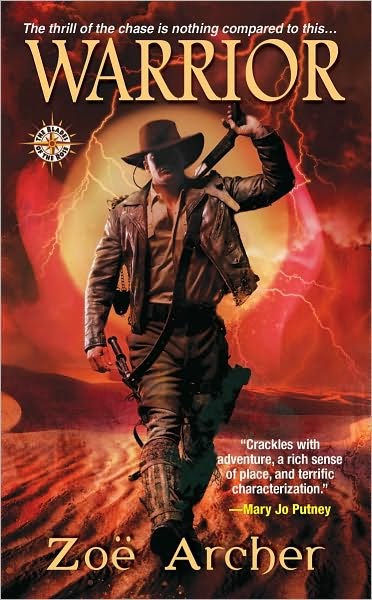
I simply don’t have time to read the back-cover copy of every book on the shelf. By scanning the cover art, I’m hoping to find a book that appears to fall into the right category and have the right tone I’m looking for. A regency historical fiction should be easily distinguishable from a contemporary romantic suspense (otherwise the marketing and art department have failed miserably).
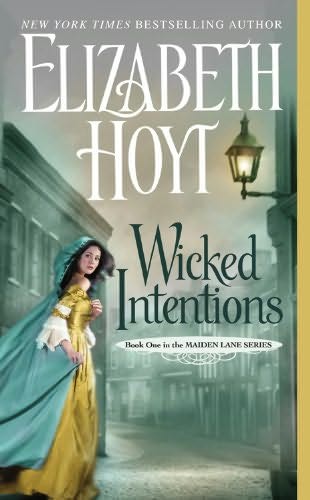
With e-books and online shopping, the cover art is slightly less important since I can reduce my browsing time by choosing specific categories (Fiction > Romance > Fantasy and Paranormal > Time Travel) rather than browsing the shelves of the entirely-too-broad category of “Romance” to find the type of book I’m in the mood for.
But bad/good cover art can still make or break a sale for me.
If the cover art is cheap-looking (especially for self-pubbed novels), it’ll turn me off. I start thinking that the quality of the writing must be equally half-assed. The same goes for overly-cheesy covers, I don’t want to be embarrassed when seen reading it. (On that note, has anyone else ever folded the front cover over on itself when reading a romance novel with one of those bodice-ripper covers? Especially when you are reading said book at your desk at lunch at your work place? Yeah, OK, maybe it’s just me.)
Setting the right tone/mood is imperative. If it’s steamy, I want to see a hint of that. If it’s adventurous, give me some action or a sense of movement/suspense. With online sellers and e-books, sometimes simpler is better when it comes to cover art (since the size of the photo will most likely be significantly smaller than in real life). No one wants to squint at a tiny, cluttered image trying to figure out what the hell is being portrayed.
I *love* it when a cover has clearly been created *just* for that book… when there are little details that are unique to the story, like a specific tattoo on a hero’s (or heroine’s) arm, or an actual scene from the story itself (with correct props and clothing and background), or seeing the heroine in a dress that perfectly matches the description the author provided in chapter three… Sometimes details like that can add a whole new enjoyable element to my reading experience.

However, sometimes specificity backfires. I’ll admit that I’ve NOT bought a book because I found the male model on the cover unattractive. (OK, alright, I’ve also BOUGHT a few books based solely on how hot I thought the male model was). So sometimes I prefer silhouettes or below-the-neck-only renderings of the main characters, because those vague images allow me to fill in the blanks with my own imagination. And of course my own imagination will always match my tastes.
So what kind of novel cover art makes you pass it up or snatch it up?

 Laura Sheehan - Author